Live: Israel says it will control bridges and area south of Lebanon’s Litani River

Live Updates
Lieutenant General Eyal Zamir, Israel’s army chief of staff, said the military is likely to remain engaged in fighting on multiple fronts throughout 2026.
He said Israel has been involved in a sustained campaign since October 2023, when it launched its genocidal war on Gaza, and expects the conflict to continue across those fronts.
Zamir also stressed the need to recruit more troops to meet growing operational demands.
Stephen Doughty, UK minister of state for Europe and North America, said Britain does not support the US blockade but backs efforts to reopen the Strait of Hormuz with international partners.
He said maritime traffic must move freely without tolls or security risks, in line with international law.
Doughty described Iran’s blocking of the strait as holding “the rest of the world to ransom” and stressed the need for diplomacy, de-escalation and a ceasefire.
German Chancellor Friedrich Merz criticised the US for entering the war on Iran without a clear plan, warning this complicates efforts to bring the conflict to an end.
“The problem with conflicts like these is always the same: it’s not just about getting in; you also have to get out. We saw that all too painfully in Afghanistan, for 20 years. We saw it in Iraq,” he said during remarks to students in Marsberg.
“Especially since the Iranians are negotiating very skillfully - or rather, very skillfully not negotiating and then letting the Americans travel to Islamabad, only to send them back without any results. An entire nation is being humiliated by the Iranian leadership, especially by these so-called Revolutionary Guards.”
He said Germany remains willing to deploy minesweepers to help reopen the Strait of Hormuz, but only once the fighting has ended.
This live page will close shortly, with ongoing coverage continuing on a new page.
Here is a recap of the day’s key developments:
-
Iran has told the International Maritime Organisation it will allow “non-hostile” shipping to pass through the Strait of Hormuz, while excluding vessels linked to the United States, Israel and other countries it accuses of aggression, the Financial Times reported.
-
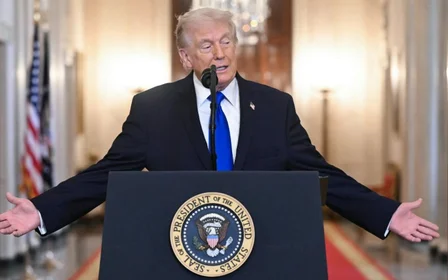
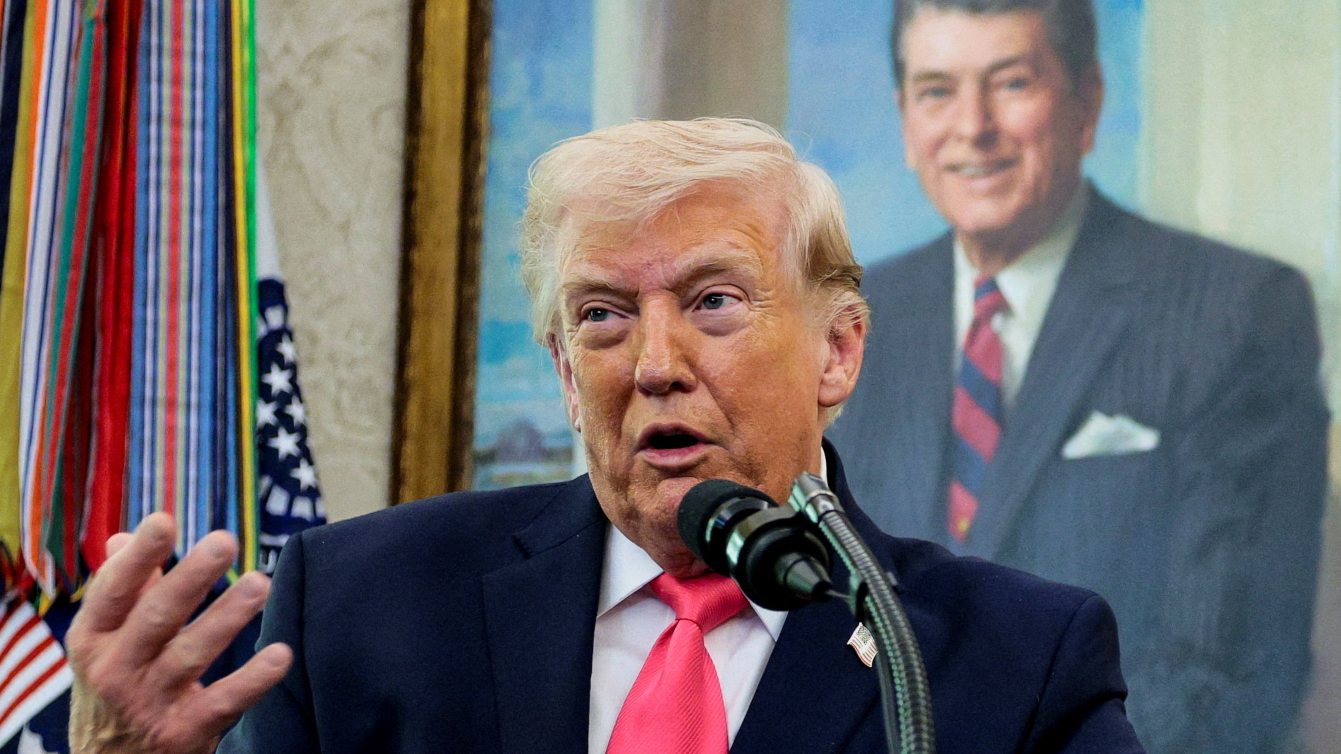
US President Donald Trump on Tuesday told reporters that the US was talking to "the right people" in Iran in order to reach an agreement to end hostilities, adding that the Iranians want to “reach a deal very badly”.
-
Shell CEO Wael Sawan warned Europe could face fuel supply shortages as early as next month if the war involving Iran continues. He said the disruption is spreading across regions as energy markets tighten.
-
President Donald Trump's approval rating fell in recent days to its lowest point since he returned to the White House, with the US hit by a surge in fuel prices and widespread disapproval of the war he launched on Iran on 28 February, a Reuters-Ipsos poll found.
-
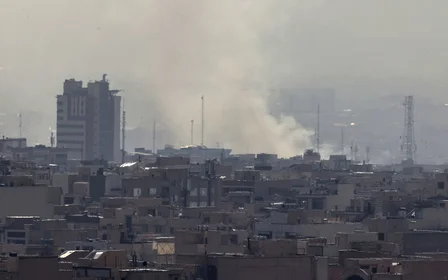
Iranian media reported that an airstrike carried out by the “American Zionist enemy” hit a residential area in Tehran, with rescue teams searching for survivors in the rubble.
Iran has told the International Maritime Organisation it will allow “non-hostile” shipping to pass through the Strait of Hormuz, while excluding vessels linked to the United States, Israel and other countries it accuses of aggression, the Financial Times reported.
The policy was outlined in a letter circulated to member states.
The move comes as threats of missile, drone and mine attacks have disrupted traffic through the vital waterway, which carries about a fifth of global oil and gas supplies.
Ships seeking passage must do so “in coordination with the competent Iranian authorities,” according to a foreign ministry communication, as uncertainty remains over how many vessels qualify.
A 10-year-old girl in Iran died after suffering “shock and psychological stress” following an explosion in the city of Yazd, according to Fars news agency.
The blast was linked to a strike on a nearby military site, the report quoted a local official as saying.
Authorities said the explosion occurred outside the city, with no further details immediately available on the incident.
China’s foreign ministry called for dialogue to resolve tensions in the Middle East, urging parties to begin peace talks.
“Hot issues should be resolved through dialogue,” the ministry said, adding that all sides should work toward negotiations to de-escalate the situation.
The statement comes amid escalating conflict and growing regional instability.
Missile attacks from Iran resumed over Israel after a brief lull, with air raid alerts sounding across central areas, including Tel Aviv, Al Jazeera reported.
Israeli defences intercepted several incoming projectiles, with images showing interceptions in the skies over the city.
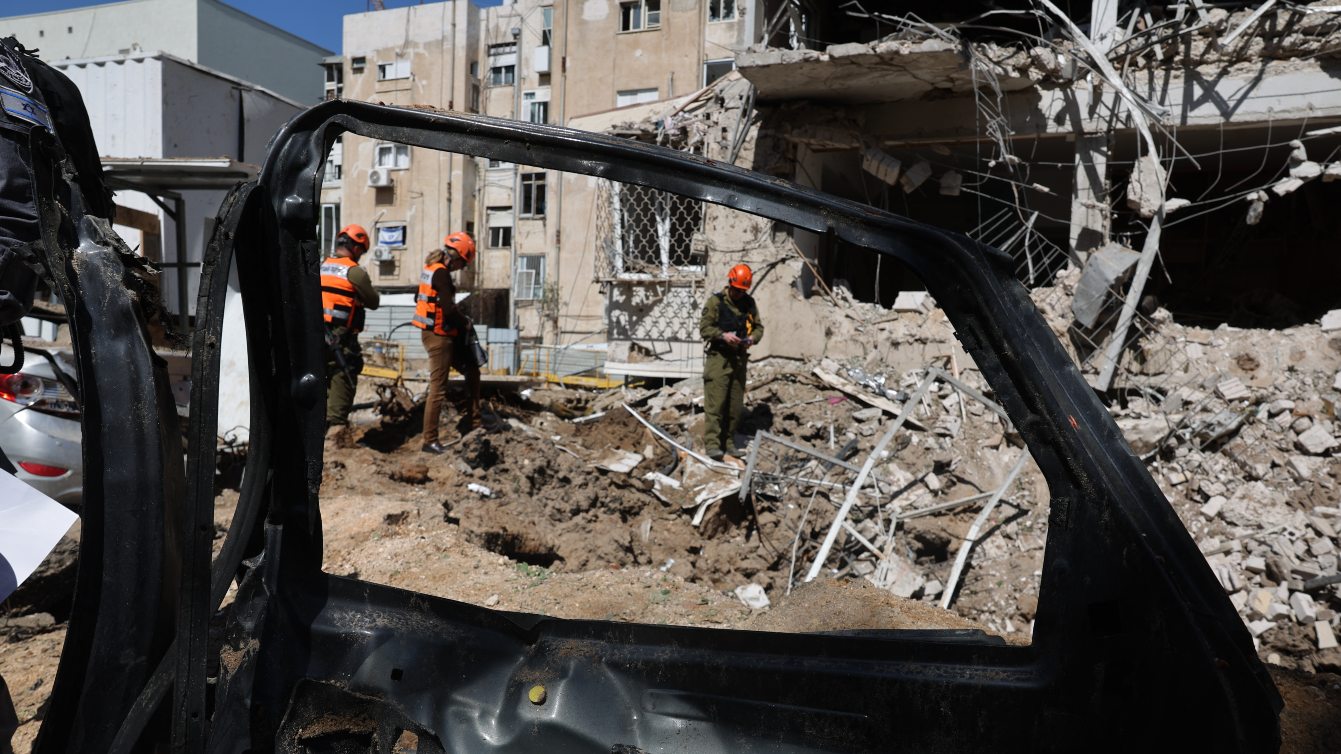
In Bnei Barak, a missile struck a residential area, injuring nine people, including six children, emergency services said.
Earlier, a missile penetrated Israel’s air defences in Tel Aviv, causing significant damage and wounding four people, prompting an investigation into the system’s failure.

Iran’s Khatam al-Anbiya headquarters rejected US claims of negotiations, with a military spokesperson dismissing recent statements by President Donald Trump.
“Has the level of your internal conflicts reached the state of negotiating with yourselves?” Lieutenant Colonel Ebrahim Zolfaghari said, according to Fars news agency.
“Don’t call your failure an agreement,” he added, warning there would be no return to previous oil prices or the earlier order “until our will is done.”
"This will be created when the thought of taking action against the Iranian nation is completely erased from your dirty minds," Zolfaghari said.
He said: “No one like us will get along with someone like you. Not now, not ever.”
Canadian energy minister Tim Hodgson on Wednesday said that the world is facing the biggest disruption to energy supplies in history, the Financial Times newspaper reported.
Hodgson said that his country’s producers are in an ideal position to meet customers’ needs for alternative supplies.
“It hasn’t been clear in such a long time how important energy security is to our national security and our allies’ national security. And so, in many ways it’s Canada’s moment,” Hodgson said in an interview at the CERAWeek energy conference in Houston.
“The world is desperate. They need a reliable supplier,” he added.
Iran’s Revolutionary Guard said it launched a new wave of attacks under Operation “True Promise 4” targeting Israeli military sites, adding that it marked “the beginning of targeting gathering places of Zionist forces in northern Palestine and Gaza".
“We launched the eightieth wave of Operation ‘True Promise 4’,” the IRGC said, adding that “these operations are the beginning of targeting the gathering places of Zionist forces in northern Palestine and the Gaza Strip".
It said the strikes targeted “the military command… north of the city of Safed” and that "strategic points and military centres” were hit.
US President Donald Trump said “this war has been won,” claiming a joint US-Israel campaign against Iran had eliminated key leaders and secured commitments from Tehran to never seek a nuclear weapon.
Iran denied any negotiations and reiterated its longstanding position that it does not seek nuclear weapons.
Trump said Vice President JD Vance and Secretary of State Marco Rubio were involved in talks, while also hinting at a “present” related to oil, gas and the Strait of Hormuz.
Shell CEO Wael Sawan warned Europe could face fuel supply shortages as early as next month if the war involving Iran continues. He said the disruption is spreading across regions as energy markets tighten.
“It’s a ripple effect,” Sawan said, adding that shortages have already affected parts of Asia and could soon reach Europe.
“The problem is, we are more in reaction mode,” he said, urging governments to plan ahead and strengthen resilience in energy supply systems.
The Islamic Resistance in Iraq said its fighters carried out 23 operations targeting “enemy bases” in Iraq and across the region over the past 24 hours.
The group said the attacks involved “dozens of drones and missiles.”
The Islamic Resistance in Iraq is a network of paramilitary groups, including factions such as Kataib Hezbollah, which have previously targeted US and allied positions in the region.
US media outlets, citing unnamed officials, reported that Washington has sent a 15-point plan to Iran aimed at ending the war.
The Wall Street Journal said the proposal calls on Tehran to dismantle its main nuclear sites, halt uranium enrichment and suspend its ballistic missile program, while also curbing support for allied groups and reopening the Strait of Hormuz.
In return, the United States would lift nuclear-related sanctions and assist Iran’s civilian nuclear program, the report said.
The New York Times said the plan was delivered via Pakistan and addresses nuclear and missile issues as well as maritime security, adding that Pakistan’s army chief has emerged as a key intermediary.
Israel’s Channel 12 reported the proposal includes a month-long ceasefire to allow negotiations.
Reuters reported that a source familiar with the matter confirmed the plan was sent.