Saudi Arabia executes eight people in single day

Saudi Arabia executed eight people in a single day, the majority of them foreign nationals on drug-related charges.
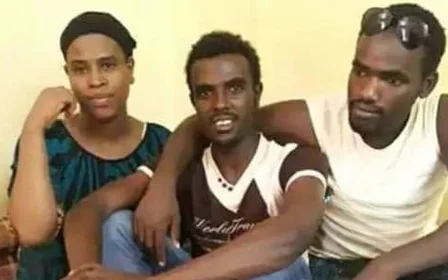
On Saturday, the Saudi Press Agency reported that four Somali and three Ethiopian nationals were executed in the southern region of Najran for “for smuggling hashish into the kingdom”.
One Saudi man was executed for murdering his mother.
The latest deaths come amid a surge in executions mostly targeting foreign nationals for drug-related offences, in what the UK-based organisation Reprieve and the European Saudi Organisation for Human Rights (ESOHR) describe as an "unprecedented execution crisis".
Since the Saudi authorities lifted an unofficial moratorium on capital punishment for drug-related offences in 2021, the kingdom has turbocharged executions.
New MEE newsletter: Jerusalem Dispatch
Sign up to get the latest insights and analysis on Israel-Palestine, alongside Turkey Unpacked and other MEE newsletters
In 2024, Saudi Arabia executed a record 345 people, almost half of them on charges of non-lethal crimes, according to Reprieve.
This year it is set to break that record, having executed 230 so far in 2025, according to an AFP tally, 154 of them on drug-related charges.
Foreign nationals are particularly at risk, accounting for 92 executions in 2024.
According to monitoring by Reprieve and ESOHR, between 2010 and 2021, Saudi Arabia executed almost three times as many foreign nationals for drug-related offences as Saudi nationals.
That was despite foreign nationals representing just 36 percent of Saudi Arabia's population.
"In the failed global war on drugs we see the same pattern repeating itself - authorities respond to concerns about drug use by killing poor and marginalised groups," Reprieve's head of MENA death penalty projects, Jeed Basyouni, previously told MEE.
To make matters worse, they rarely receive basic due process rights such as legal representation or interpreters during their trials," Basyouni added.
Middle East Eye delivers independent and unrivalled coverage and analysis of the Middle East, North Africa and beyond. To learn more about republishing this content and the associated fees, please fill out this form. More about MEE can be found here.