Gulf states have downplayed damage caused by Iranian strikes: Report

Arabian Gulf monarchies have “suppressed” information about the extent of damage done to their physical infrastructure by attacks from Iran and its allies, Reuters reported on Thursday.
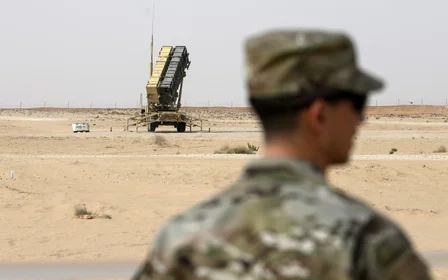
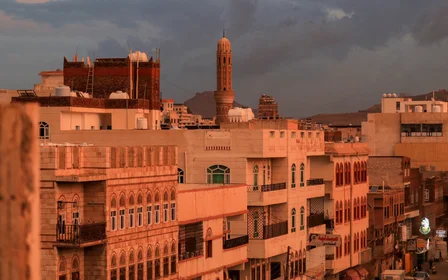
Gulf states such as Qatar, the UAE, Bahrain, and Kuwait faced thousands of missile and drone strikes launched by Iran in retaliation for the US-Israeli attack on the Islamic Republic that began on 28 February. More recently, Saudi Arabia has come under attack from the Houthis in Yemen.
The Houthis and Iran targeted civilian infrastructure like pipelines, energy facilities and, in one case, a nuclear energy plant.
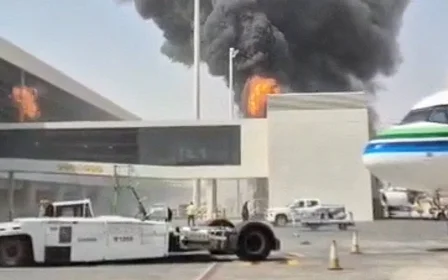
Reuters' assessment is likely to cast new doubt on how Gulf states describe strikes on their territories. For example, Saudi Arabia’s energy ministry said that a Houthi drone strike caused a "limited fire" at the headquarters of the kingdom's national oil company, Aramco, in Dhahran.
But Reuters reported on Wednesday that the headquarters suffered “extensive damage”.
New MEE newsletter: Jerusalem Dispatch
Sign up to get the latest insights and analysis on Israel-Palestine, alongside Turkey Unpacked and other MEE newsletters
One source said the top three floors of Aramco’s headquarters, including the office of Aramco CEO Amin Nasser, were severely damaged, with part of the ceiling caved in and windows and doors blown out.
Since the war on Iran began, Reuters said that overall there has been a discrepancy between how Gulf states explain the damage and the reality on the ground.
Sophisticated targeting
The Gulf states have acknowledged strikes on their territories but say that damage was caused by falling debris, when in fact, satellite imagery and experts have said it was extensive and underscored sophisticated targeting.
In the UAE, an electrical substation roof at the Barakah nuclear energy plant was struck, forcing one of its four reactors to use emergency diesel generators. Iran had the plant’s floor plan and the location of the electrical substation, an Iranian official and two officials in the Gulf told Reuters.
Likewise, Iran’s attack on Qatar’s Ras Laffan liquefied natural gas facility revealed sophisticated targeting. The strike hit “cold boxes” that house cooling equipment needed to liquefy gas. The equipment takes months to build.
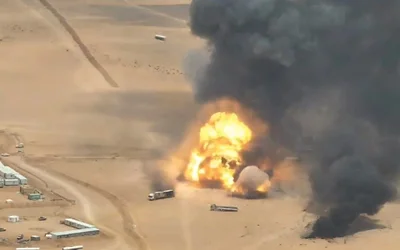
Perhaps no facility underscores the mismatch between how Gulf states characterised attacks on their facilities and the reality on the ground like Iran’s targeting of the UAE port of Fujairah.
Iran hit the port multiple times, targeting critical infrastructure, at times after the UAE had repaired it, Reuters said.
The first strike on Fujairah came on 3 March, causing two storage tanks to burn for days. A second strike on the port hit a matrix manifold, a transfer system of 62 pipelines that feeds crude oil and finished petroleum products from oil terminals to shipping berths, Reuters reported, citing satellite data.
Emirati officials blamed the two strikes on falling debris, but Reuters said that this explanation did not match damage assessments.
Ramanan Krishnamoorti, a petroleum engineering professor at the University of Houston, said the UAE’s official explanation stretched credibility: “This is a wound to the brain and heart” for the UAE.
Follow-up strikes on Fujairah in March hit the port’s other matrix manifold, Reuters reported.
The UAE worked quickly to repair Fujairah, a critical port for oil exports. The UAE appeared to have made the port fully operational by the end of March, but it was attacked by Iran again in May, with a drone hitting pipes leading to the first matrix manifold attacked in March.
Reuters reported that refined petroleum product exports from the port did not recover until September.
Middle East Eye delivers independent and unrivalled coverage and analysis of the Middle East, North Africa and beyond. To learn more about republishing this content and the associated fees, please fill out this form. More about MEE can be found here.