Iraqi Kurds suggest peace process between Iran and Iranian Kurdish opposition

Iraqi Kurdish politicians have been engaged in discussions with Iran over ending their conflict with Iranian Kurdish opposition parties, in a bid to stave off further attacks in the Kurdish autonomous region.
That is according to the leader of the Patriotic Union of Kurdistan (PUK), which came as a surprise to the Iranian Kurdish groups who have long been based in northern Iraq in opposition to the Islamic Republic.
Bafel Talabani made the comments on Monday during the annual Middle East Research Institute (MERI) forum.
He suggested the process would be similar to the peace process the Turkish government launched with the Kurdistan Workers’ Party (PKK) in October 2024 to disband the party in exchange for more constitutional rights and freedom for its imprisoned leader, Abdullah Ocalan.
Talabani said the proposal had been discussed extensively with Iranian officials in Tehran, and that it will be a lengthy process. He visited Iran last month, meeting Iranian officials, including Foreign Minister Abbas Araghchi on 16 September.
The Iranian foreign ministry readout on the meeting with Talabani did not mention any peace process, but Araghchi stressed the need to strengthen cooperation to safeguard the security of their shared borders in accordance with the bilateral security understanding.
Iranian Kurdish parties contacted by Middle East Eye said they were not aware of new talks with Iran, or refused to comment.
“At present, there is neither any groundwork for dialogue between the Kurdish nation and Iran nor any indication that such dialogue is forthcoming,” a member of the Kurdistan Freedom Party (PAK) told MEE.
New MEE newsletter: Jerusalem Dispatch
Sign up to get the latest insights and analysis on Israel-Palestine, alongside Turkey Unpacked and other MEE newsletters
'There is neither any groundwork for dialogue between the Kurdish nation and Iran nor any indication that such dialogue is forthcoming'
- Kurdistan Freedom Party source
“We approach this issue with caution, drawing lessons from past experiences and refusing to give Iran’s deceitful and dishonest authorities any opportunity to manipulate us through political manoeuvring and false promises.”
Fariba Mohammadi, deputy secretary of the left-wing Komala group, told MEE that as “far as the Komala Party of Kurdistan is concerned, we have received no proposal or offer for dialogue, nor has any form of communication taken place regarding such a process, whether from Iran or from a third party.”
“Establishing the conditions for dialogue with a regime that has spent nearly half a century violating Kurdish rights, militarising Kurdistan, and executing thousands of young Kurds may not be easy," he said.
"Neither we nor other Kurdish opposition parties have ever rejected negotiations or dialogue. Rather, we consider dialogue one of the methods of political struggle.”
Repeated clashes
Baghdad and Tehran signed a deal in March 2023 to push exiled Iranian Kurdish opposition groups away from the border and to disarm them, after the Iranian government blamed the groups for fomenting the Woman, Life, Freedom protests in Iran in 2022 and targeted them with drones.
Rudaw also reported that on 13 October that Iraqi, Kurdish, and Iranian officials are set to meet this upcoming Monday to discuss the presence of Iranian Kurdish opposition groups in Iraqi Kurdistan.
This proposal also became public after the withdrawal of the US-led Coalition on 30 September, which has left the Iraqi Kurds without air defences. Since the withdrawal, Iran has targeted the Iranian Kurdish parties with drones three times, including during the Meri forum in Koya.
Several Iranian Kurdish groups have been living in exile in Iraq’s autonomous Kurdistan region since the 1980s. Five of them formed the Coalition of Political Forces of Iranian Kurdistan before the war on 28 February, with the Komala party joining in March.
In early March, Trump said he would back Iranian Kurds to launch an offensive against Iran, but later backtracked. There were also reports in Israeli media that Turkey thwarted an Israeli and US-backed incursion of Iranian Kurdish parties in the beginning of the war.
At the Meri forum, Kurdistan Regional Government (KRG) President Nechirvan Barzani also stated that there are opportunities for Kurds in Iran, like in Syria and Turkey.
“At all our meetings in Tehran, this issue has been part of our discussions," he said.
During the war, the Kurdistan Region was targeted with over 1,000 missile and drone strikes, in which 32 people were killed, including 19 members of Iranian Kurdish opposition parties. Iranian officials have defended such attacks on Iranian Kurdish opposition parties.
At the same time, President Barzani scolded the Iranian Kurds for acting in a “highly irresponsible manner” during the war.
“Their statements and activity on social media gave the impression that they were about to move into Iran. This exposed the Kurdistan Region to a very serious danger," he said.
However, he added that the PUK and the Kurdistan Democratic Party (KDP) thwarted this plan by controlling the border with military forces from the first day of the war.
Failed past negotiations
It is not the first time that Iran has negotiated with the Iranian Kurds.
On 13 July 1989, during negotiations between Iran and Iranian Kurds, Democratic Party of Iranian Kurdistan (PDKI) leader Abdul Rahman Ghassemlou was assassinated in Vienna, while another former leader, Sadegh Sharafkandi in Berlin was assassinated on 17 September 1992.
Also in 2011, the PKK-affiliated Kurdistan Free Life Party (PJAK) and Iran reached a ceasefire agreement after Iran agreed to stop executing Kurdish political prisoners if PJAK ceased its attacks.
PJAK did not respond to a request by MEE for comment.
' If Ocalan gives his approval, I believe PJAK could take the lead in pursuing such a process [with Iran]'
- Shamal Bishir, Iranian Kurdish analyst
According to Shamal Bishir, a Stockholm-based Iranian Kurdish analyst and former head of external relations for PJAK, at the time Nechirvan Barzani assumed a similar mediating role, facilitating contacts between Iranian Kurdish parties and Tehran.
Also in 2019, there were failed negotiations between four Iranian Kurdish parties, including two PDKI factions and two factions of Komala and Iran in Oslo through a Norwegian conflict resolution organisation
“The 2019 attempt was another effort to find a political solution,” a member of an Iranian Kurdish party who wished to remain anonymous, told MEE, blaming Iran for being responsible “for the talks not moving forward”.
For its part, Ankara was prompted to launch a peace process with the PKK due to escalating conflict between Israel and Iran.
“When it comes to PJAK, much will depend on the ongoing process between Ocalan and the Turkish state,” said Bishir.
“There are indications that Ocalan has discussed this issue with the Peoples' Equality and Democracy Party (Dem Party) delegation and suggested that Bafel Talabani and Nechirvan Barzani facilitate a mediation process between PJAK and Iran. If Ocalan gives his approval, I believe PJAK could take the lead in pursuing such a process."
During the Meri conference, Dem Party co-chair Tuncer Bakirhan stated that Iran could also resolve its own problems if it were to embark on a path similar to the process in Turkey.
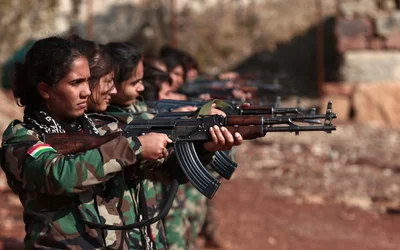
Jabar Yawar, former secretary general of the Ministry of Peshmarga told MEE that starting a peace process with the Iranian Kurdish opposition is also more complicated for Iran than for Ankara, which only had to deal with one party, the PKK.
“The Iranian Kurdish opposition is fragmented, with many different groups. There is PJAK, Komala, the PDKI, Khabat, and other organisations.
“These groups have formed a coalition recently, during the period of conflict between the United States and Iran. However, they have significant differences in their views on this issue. There is no single counterpart with whom Iran can negotiate.”
If the PJAK would engage in negotiations on its own, it could also threaten the unity of the Coalition of Political Forces of Iranian Kurdistan, of which it is a member.
Mohammed A Salih, a non-resident senior fellow at the US-based Foreign Policy Research Institute, and an expert on Kurds, told MEE the ball is now firmly in the Iranian government's court.
“Kurdish political demands are neither new nor particularly ambiguous. They include recognition of Kurdish linguistic and cultural rights, the freedom to engage in political activity and peaceful assembly, and some degree of meaningful self-governance,” he said.
“If Tehran demonstrates a genuine willingness to accommodate these demands and creates credible conditions for political engagement, there would certainly be grounds for cautious optimism.”
Middle East Eye delivers independent and unrivalled coverage and analysis of the Middle East, North Africa and beyond. To learn more about republishing this content and the associated fees, please fill out this form. More about MEE can be found here.